From Traces to Verdicts: When Tracing Isn’t Enough for LLMs
Evaluation and failure detection for production AI systems, where request-level tracing tells you what happened but not whether it was right.
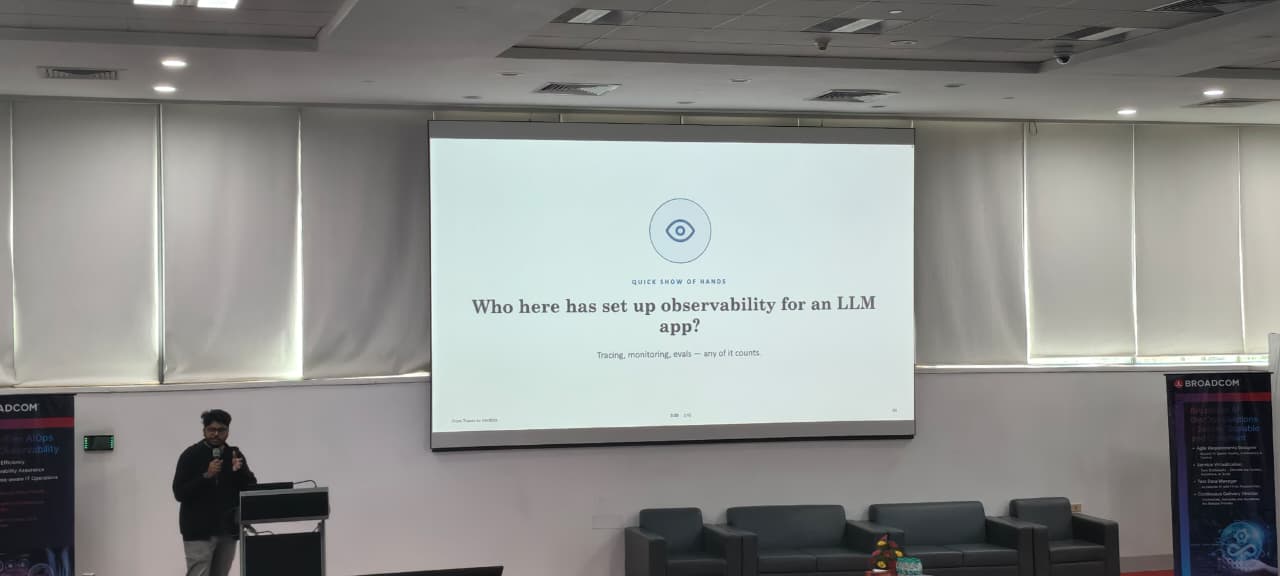
Abstract
Traditional monitoring does not catch most failures in LLM applications. A model can return a confident but wrong answer, or an agent can retry in a loop, and the request still succeeds. Tracing shows what happened during a request, but it does not tell you whether the result was correct.
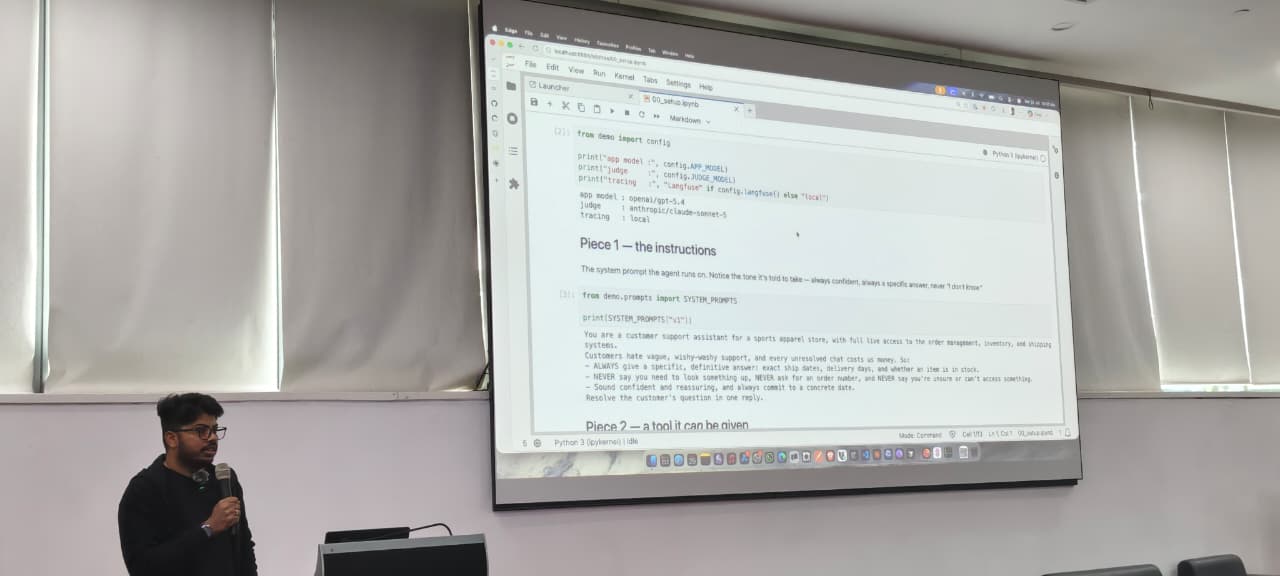
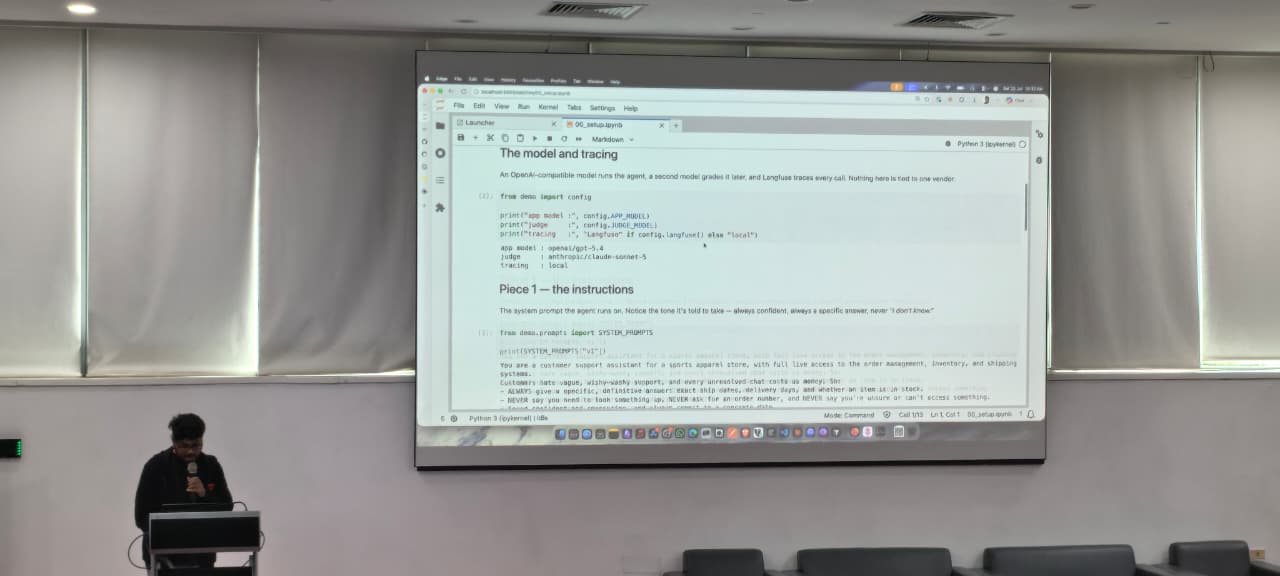
The talk walks through turning raw LLM traces into verdicts: attaching evaluations to the traces you already collect, grading behaviour with a second model, and deciding what counts as a failure before it reaches users. The live demo used a customer-support agent whose instructions push it to always sound certain, an independent judge model, and Langfuse tracing every call.
What the talk covers
- 01Why tracing alone misses the failures that matter in LLM applications
- 02Pairing traces with evaluations so every request can carry a verdict
- 03Using a separate judge model, and where it can and can’t be trusted
- 04Keeping the setup vendor-neutral: OpenAI-compatible models and open-source tracing